

A hospital CEO who turned around a near-bankrupt organization over two decades credits one thing above all else: the steady accumulation of small improvements. Not a grand strategy. Not a consultancy-led transformation. Just the ongoing discipline of kaizen — and the surprising things that happen when you stick with it.
During a 2012 Lean Healthcare study tour of Japan (with Kaizen Institute), our group visited Nerima General Hospital in Tokyo. The CEO, Shuhei Iida, MD, spent a generous amount of time with us, talking about their “MQI” program — Medical Quality Improvement. MQI is rooted in Total Quality Management (TQM) principles, built around quality circle team projects that the hospital had sustained for about 20 years. More recently, they had layered Lean methods like 5S on top of those existing efforts.
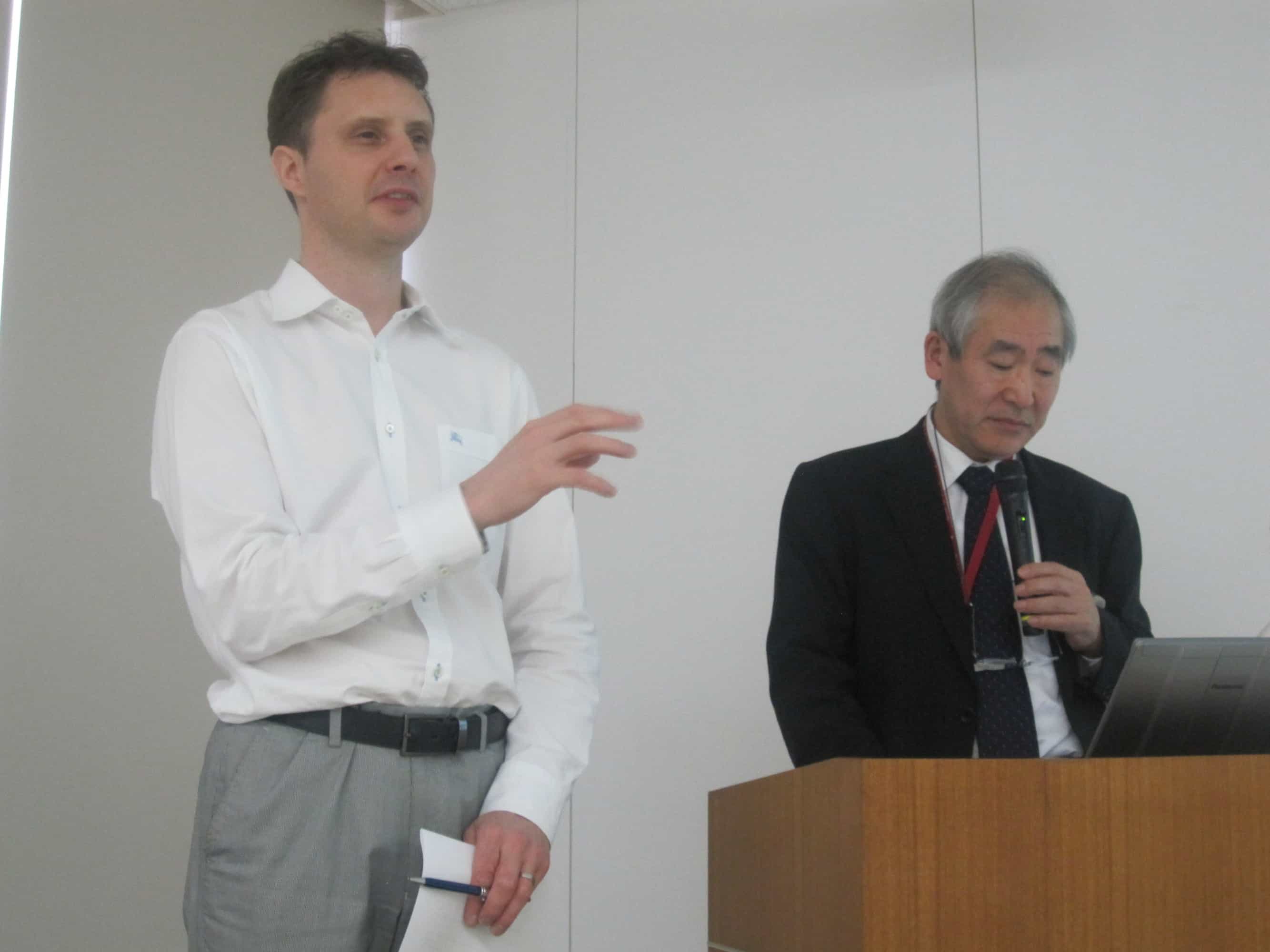

Dr. Iida had been CEO for just over 20 years at the time of our visit. When he took the job in 1991, the hospital was on the verge of bankruptcy. By 2012, they were financially healthy — “in the black,” as he put it — and had the money to build a new hospital, while most Japanese hospitals were losing money. The hospital now receives visitors from around the world, including Europe and Africa.
What stood out to me was how Dr. Iida framed the relationship between kaizen (small improvements) and innovation (larger improvements). He talked about how, together, they lead to breakthroughs — and how one is absolutely necessary for the other.
Small Change, Big Consequences
Their annual theme for MQI activities is “think for yourself and take action.” Dr. Iida stated that it's easy for an organization to talk about change and innovation, but harder to do.
He said, multiple times, that kaizen alone won't transform the hospital or lead to breakthroughs. But he emphasized:
“If you keep doing kaizen, you will get innovation.”
People love talking about “innovation” as a goal. I'd add that it's a more appealing concept than continuous incremental improvement, if you will. But Dr. Iida's point was that you don't plan to innovate — it happens by accident or chance, not by design.
“As you do kaizen, you increase your chance of innovation, as you stumble into things. As you keep doing kaizen, you also look for big jumps.”
That idea resonated enough that Joe Swartz and I included Dr. Iida's quotes in our book, The Executive Guide to Healthcare Kaizen. Research supports the same pattern. Charles A. O'Reilly III (Stanford) and Michael L. Tushman (Harvard Business School) studied 35 significant breakthrough innovation attempts and concluded that organizations need to maintain a variety of innovation efforts to flourish over the long run — including incremental improvements in existing products and operations, not just the big bets.
Or as Linus Pauling once put it:
“The best way to have a good idea is to have lots of ideas.”
Not Just Operations — People
Dr. Iida's final thought on kaizen was that
“it is not just about improving operations, but also breaking down walls and building a better place.”
That connects to something else he emphasized:
“We are not just interested in improving processes, but also developing people.”
He saw kaizen as doing double duty — improving the work and growing the people doing the improving. The process of engaging staff in small changes builds their skills, their confidence, and their willingness to take on bigger challenges.
The pattern Dr. Iida described — that sustained small improvement creates the conditions for innovation to emerge — keeps showing up across industries and across decades. Organizations chase innovation as if it's something you can point yourself at directly. What would change if more leaders treated it as something you create the conditions for, instead?
Update: This idea of being a “development company” is something I blogged about after a later trip to Japan in 2018: Toyota as a People Development Company: Why Lean Starts With Developing People, Not Tools
A Creative Moment from the Tour
On this topic, there's an amazing video that was made last night by two Belgian tour members and a member of the tour organizing team. They made this in a bar, using beer coasters, at about 11 pm and midnight last night. It's brilliant. See their blog post about the video.
p.s. You can read a detailed blog post about the first hospital that we visited and their 5S program – written by Thomas and Gert.
Learn about future tours:









Mark
In fact, creativity follows an increasingly better understood neural pathway– relationship based on communication, willingness to engage for involvement, and then furtile ground to learn and even be able to be creative–appear to match to different and sometimes conflicting brain areas.
‘Increasing the chances of innovation’ results when we pay attention to cultivating the neural path– just so happens many, if not most Lean practices do just that. No surprise for this correlation.
‘You can read a detailed blog post about the first hospital that we visited and their 5S program – written by Thomas and Gert.’
5S as a communication strategy and tool—brilliant!
Keep the cards and letters coming!
Mark
[…] appreciate the $50 savings won’t get the $50,00 savings [in a later improvement].” As I wrote about yesterday, doing lots of small Kaizen improvements allows you to stumble across larger opportunites, as they […]
Maybe I’ve just become more observant recently, but it seems that much of the current “leadership” thought coming out of Lean discussions includes “developing people”. Can organizations that are stuck on “holding people accountable” as a development scheme really do Lean? Sorry for all the quote marks.
It is not ‘accountability’ that is the issue, but the intent behind accountability that matters.
If ‘holding people accountable’ is intended to get people to do something I want them to do, then it would not be compatible with Lean.
But if it reflects people following through on commitments they have been part of formulating and have made in order to learn if their countermeasures perform as intended, and so as to adjust and refine the process being studied, then it is very much in keeping with a Lean approach.
Mark
Yeah, I think anonymous put “accountability” in quotes because that term “hold people accountable” is often just a way of describing bullying management behaviors – including blaming and forcing others to do what we want.
Yes, another example of words and phrases hijacked by those managing for conformity, rather than engagement. Just like ‘buy in’, ‘team’, ‘associate’, and ‘naysayer’.
[…] In his latest book, Maurer brings these ideas back to the workplace, with stories about how this same kaizen mindset can be applied to improve quality, boost morale, reduce costs, reduce healthcare expenses, and more. The book is focused more on businesses, hospitals, and organizations, rather than individuals – but the understanding of how change happens is based on our own personal brain chemistry and evolution. Maurer calls kaizen “a doable path to innovation” because we’re more likely to have big changes occur when we start small. I wrote about similar thoughts from a Japanese hospital CEO back in November. […]
[…] The practice of Kaizen, of course, brings lots of small improvements. But, it’s often surprising how breakthrough ideas with a really impact come out of the process of identifying, exploring, implementing, and tweaking relatively small ideas. Read what I saw a Japanese hospital CEO say about this in a post from last year. […]
I’m working with Kaizen Institute to do another Lean Healthcare study trip to Japan, the week of November 17. 2014.
Contact me if you’re interested in learning more.
[…] million dollar ideas from the start and we shouldn’t pressure people for ROI or cost savings. As a hospital CEO said in 2012, the best way to find ideas with a big impact is to find and implement lots of […]
[…] Mark’s note: Today’s guest post is by Gert Linthout, from Belgium. Gert and I were part of the same Lean healthcare study trip to Japan last November. He was the co-creator of this creative video on Kaizen that I featured in this blog post. […]
[…] study trip to Japan back in 2012. He was the co-creator of this creative video on Kaizen that I featured in this blog post. See his previous guest […]
[…] study trip to Japan back in 2012. He was the co-creator of this creative video on Kaizen that I featured in this blog post. See his previous guest […]
[…] has also written about his experience visiting Nerima General, as well many reflections on Lean in Japan and in Japanese […]