Tracy O’Rourke on Vaccinations, Lean Six Sigma in Government, and More
Scroll down for video, how to subscribe, video, transcript, and more
My guest for Episode #415 of the Lean Blog Interviews podcast is Tracy O'Rourke. She is the co-author of The Problem-Solver's Toolkit: A Surprisingly Simple Guide to Your Lean Six Sigma Journey. She is co-founder of the Just-in-Time Cafe (which produces podcasts, webinars, and more). She is also a self-described “process improvement ZEALOT!”
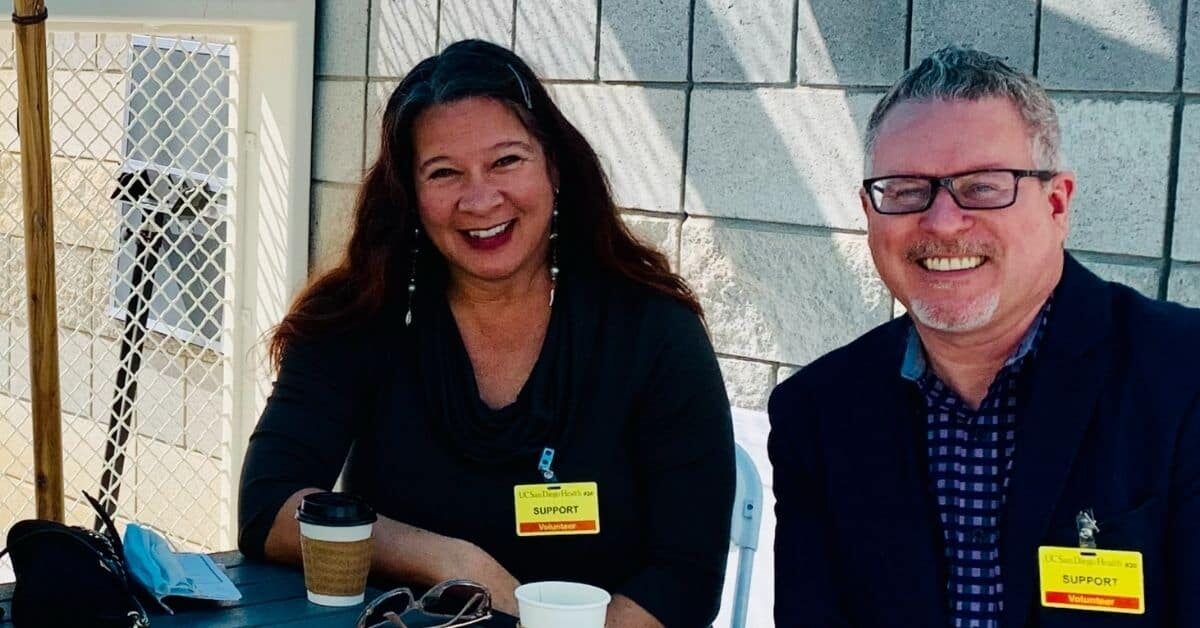
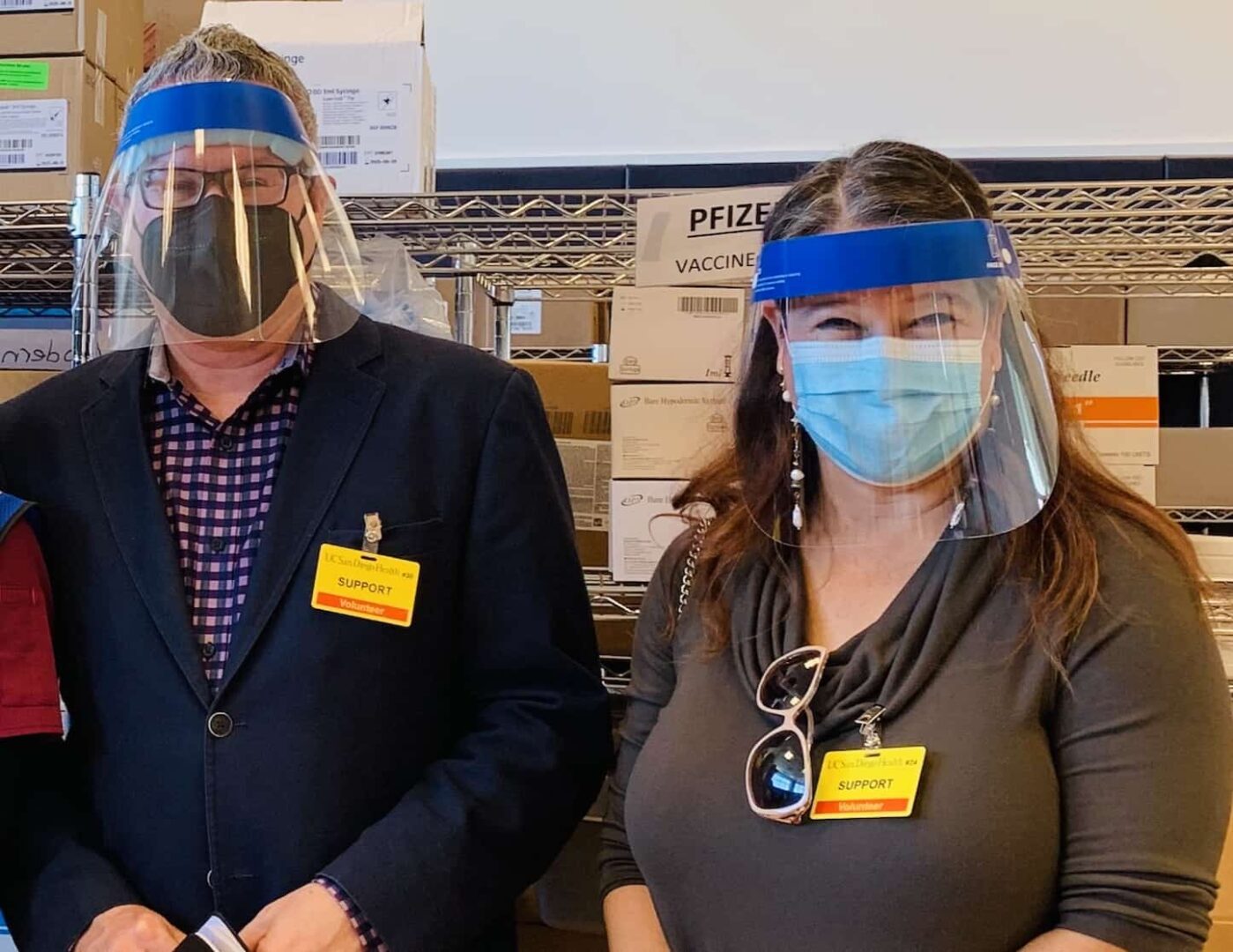
We had the chance to meet up to visit two vaccination sites in San Diego in March, and the two photos in the post are from that time together (as I blogged about here). That's one of the topics in this episode.
Topics, questions, and links related to today's episode include:
- How did you get introduced to C.I. and what flavor(s)? How did you become a Zealot?
- She is the Lead Instructor at UC San Diego for the Lean Six Sigma Green Belt (public offering)
- Visiting the UCSD vaccination sites – University and health system
- What we saw
- Walking the process
- Jerry Wright handed her the torch to be the SoCal Lean Network Chair
- 20 years in consulting, from industry to government, non-profit and education
- Can you tell us about a specific example of some of the work you've done in government?
- How do you know that it worked?
- She's also part of the Lean Communicators Network
The podcast is sponsored by Stiles Associates, now in their 30th year of business. They are the go-to Lean recruiting firm serving the manufacturing, private equity, and healthcare industries. Learn more.
This podcast is part of the #LeanCommunicators network.
You can listen to the audio or watch the video, below. I hope you enjoy it like I did.

Video of the Episode:
Automated Transcript (Not Guaranteed to be Defect Free)
Mark Graban: Hi, it's Mark Graban. Welcome to episode 415 of the podcast. It is May 20, 2021. My guest today is Tracy O'Rourke. You'll learn more about her in just a second, but if you want to find show notes and links to her website, her podcast, her books, and more. You can go to leanblog.org/415. I hope you enjoy the episode. Please follow, rate and review. If you like the episode, please share it with a friend or a colleague. Share it on LinkedIn. That would really help get the word out. It would help spread what our great guest Tracy is sharing with us today.
Thanks for listening. Our guest today is Tracy O'Rourke. She is the co-author of a book called The Problem Solvers Toolkit: A Surprisingly Simple Guide to Your Lean Six Sigma Journey. She is the co-founder of the Just In Time Cafe, which does podcasts, webinars, fair to say, and more, Tracy.
Tracy O'Rourke: Mm-hmm. Yes, absolutely.
Mark Graban: So you can find that at JITCafe.com. And the other co- in these collaborations is Elizabeth Swan, who is our guest back in episode 389. So Tracy, it's great to have you here with us today. How are you?
Tracy O'Rourke: I'm doing great, Mark. Thanks for having me. I'm happy to be here.
Mark Graban: I think we're going to have a great conversation today. We'll get to learn more about you and some of the work that you've done. In your LinkedIn profile, you describe yourself as a process improvement zealot and “zealot” is in all capitals. So you really mean it, right?
Tracy O'Rourke: I really do. I am very passionate about process improvement. I don't know why I did not ever hear about process improvement in my childhood. It was something I discovered in my adulthood and I love it. I absolutely love it.
Mark Graban: I didn't learn about it in my childhood either. So equal starting points there. But you say you don't know, well, we're going to explore. So I was going to ask you, how did you come to become a passionate zealot about process improvement? Let's try to unpack that. I mean, what do you remember about your first introductions to continuous improvement? What flavor of continuous improvement or flavors was that?
Tracy O'Rourke: Sure. So my first formal introduction to process improvement, because you know, we're problem solvers our whole life. We solve problems all the time. But my first formal introduction was when I was hired at GE Appliances back in the nineties when Jack Welch was there. And literally my first week at GE was in Green Belt training. And you know, it was very much part of the culture. It was Six Sigma.
And what's interesting about GE is it's a very flat organization. So I was frontline when I got hired, but there was only four people between me and Jack Welch. And Jack Welch managed 12 businesses. So very flat organization. And one thing I noticed about GE was you openly discussed what you wanted to do in the next two years. So there was a lot of movement and a lot of encouragement of movement.
So that was unusual for me. I wasn't used to talking to my boss about, I'm going to leave you and this is what I want to do next. So one, during one of these conversations, he asked me, well, what do you want to do next? And I said, well, you know, I think I really want to pursue this black belt position. And he goes, I think that would be great. So I called the black belt, that was my black belt at the time, and I said, Hey, I'm thinking, I really want your job. And he goes, well, that's great because I just took another position somewhere else and I'm going to recommend you.
And so I applied for the position, about 20 other people applied and I got the job. And I honestly, as soon as I got the job, I said, how come you hired me for this position? Because I had, I mean, I was just a green belt. I had done green belt projects. I hadn't been to black belt training or anything. And what they told me was that they had a new position in mind. It was a field black belt, and my primary role was to travel all over the country and train GE customers on Six Sigma, and I was going to be their free resource. And so they felt like, well it's probably easier to teach Tracy statistics than to teach an engineer how to talk to customers. That's what they told me.
So that's how it started. And then my first week as a black belt was in black belt training, and I thought I made a mistake. I was like, oh my gosh.
Mark Graban: So this is almost becoming a sub episode of My Favorite Mistake. But why did that seem like a mistake to explore that here?
Tracy O'Rourke: So it was four weeks of training and it was heavily geared towards manufacturing and there's a lot of statistics and we spent a whole week on design of experiments. And I was tasked with the burden literally, of converting it into how is this going to apply to GE customers, people like mom and pop appliance organizations like Aztec Appliance or even larger appliance companies like Home Depot.
And so I asked a lot of questions while I was in black belt training, and then the teacher told my boss that I asked too many questions. I was like, but that's good right?
Mark Graban: To me it is. Yeah.
Tracy O'Rourke: So that's how I got started originally. And I really liked the work. Absolutely liked it. I didn't want to switch jobs after that at GE. I wanted to stay as a black belt. And it was, it was, they told me they were eliminating after, you know, it was just three of us as field black belts for the whole country. Then, you know, I had basically the entire Western United States, so anytime any customer had a question or wanted to learn, I'd fly out there. And then we went from three to five to seven to nine to 13 people. And then they said, okay, our customers know enough about Six Sigma. We're eliminating the job. We want you to move to Louisville, Kentucky. I ain't moving. I lived here in San Diego. So that's kind of how it started. And then I became a consultant right after that. Actually, it's funny story. I won't get into too much detail, but GE ended up being my first consulting customer.
Mark Graban: So let me ask this. I mean, how many design of experiments (DOE) exercises did the customers ever go through? When did you ever use that week's worth of training?
Tracy O'Rourke: You know, that's the hard part is it's a little harder to apply in a transactional environment where the variables are harder to control. So unfortunately, you know, there wasn't a lot, I do have some good examples of DOE that were applied in transactional, but for the people I was helping and what they really wanted me to help them with did not apply. DOE was not applying. So a lot of training for not so much use, quite frankly.
Mark Graban: Sure. So at that point in the late nineties, GE was all Six Sigma. Correct? I mean, yes. And then I think, you know, GE started incorporating Lean. Did you learn Lean then after you left GE, or how did that come about?
Tracy O'Rourke: Yes, I did learn Lean, and a part of it was, I was hearing a lot about Lean and I really wanted to learn it completely. I didn't want to just smack on a couple of tools. I really had this desire to really learn what is this stuff about? And I picked up a book called The Kaizen Event Planner, written by Karen Martin and Mike Osterling. Read it, saw that they both lived in San Diego, and I literally found Mike Osterling and called him. I said, I need to meet with you. I need to have coffee with you. I think I maybe even emailed Karen too, and at the time I think she was just out of the country or something.
So anyways, Mike was the first to respond. We went for coffee and I said, look. I know you're going to think I'm really crazy, but I will be your Vanna. I want to learn what this is that you're doing. So if you have any local accounts, I will totally respect your client. I will be your Vanna. You need help, I'm here.
And so he was asking me a lot of questions about, well, what do I do? And you know, it's more transactionally focused. And after that meeting I thought it was great, but then I thought that guy's never going to call me. Who am I? Well, he did, and we did a couple of things together and he said, look, I'm doing these four value stream mapping sessions. Can you run the two that are transactional and then I'll run the other two? And that's how we ended up working together. And then he recommended me to be on the Lean Enterprise instructor group at San Diego State University. And we did a couple of collaborations together. So Mike is my unofficial mentor. He's great.
Mark Graban: He is a good mentor to have. I've met Mike a number of times, had the chance to collaborate. I brought him in on some client work that I was doing, and he's great. Karen's great, so good mentors and friends to have in the lean world for sure.
Tracy O'Rourke: They are.
Mark Graban: Yeah.
Tracy O'Rourke: And we still collaborate today. Mike and I, as a matter of fact, I just was emailing him today and he's like, when are we going to get together? So. He's a great guy.
Mark Graban: Yes. So before we talk about the consulting and the work that you've done, there's a couple things I want to explore or ask you about. So for one, you're still teaching through UC San Diego, Lean Six Sigma program. Can you talk about that a little bit?
Tracy O'Rourke: Absolutely. So I started at San Diego State, Angela Miller worked at San Diego State, then she got hired at UC San Diego as a program manager. And she called me and we started collaborating on developing and bringing a green belt course to UC San Diego about seven years ago now. And she really has done a lot to develop and build the programs at UC San Diego. She only had, for a while, she had project management as a program that she was managing and Lean Six Sigma, and then it just became Lean Six Sigma because it was so much work.
So I'm the lead instructor for the green belt program at UC San Diego, and have been doing that for a while. And we went from offering one course a semester to four courses a semester because of the growth and the demand. And we just recently created a Lean Six Sigma leader course, and that's starting again on May 18th, a new course. And that's going really well too.
Mark Graban: Now is that for UC San Diego employees, faculty, staff, students, or broader or both? Or?
Tracy O'Rourke: Great question. It's actually a public offering. So we have had people, and because UC San Diego is not only a training provider for Lean Six Sigma, they deploy process improvement at UC San Diego. So they do have a number of their own employees coming through the classes and also for the Lean Six Sigma leader course too. But both of those are public offerings in the extension of UC San Diego.
Mark Graban: Okay, great. Now one other thing you're involved in, and now since I'm in a different part of SoCal up in LA, not too far up the road, but hopefully I can participate in some things when we're doing things in person again. Tell us about the SoCal Lean Network and the role that you're playing now.
Tracy O'Rourke: Yes, so Jerry Wright, who was formerly the chair for AME, has been the chair for the SoCal Lean Network for over 20 years. And he recently asked me if I was interested in taking it over, and I was like, yes, I would love to. He was looking to maybe retire a little, but everybody loves Jerry, so I don't know how the guy's going to retire.
Mark Graban: People won't let him.
Tracy O'Rourke: People won't let him. So we just literally, literally, I just posted the new website design and the new logo last week. With COVID activity's been a little down because a big part of what they're doing was process walks, tours, work tours to lots of organizations. And so obviously you can't do that anymore. And so I'm really excited, you know, building the lean community and being involved in the lean community is really important to me. I really get a lot of joy out of it. I actually love making people look good, honestly. And I love sharing people's stories about why they were successful and even maybe some of their failures, because that's where people learn and grow. But I just, I really, I have a very big appetite for hearing stories and promoting stories. So if people want to share them, I'm kind of the perfect person to like promote that 'cause I'm just so interested myself.
Mark Graban: So that might get shared through the Just In Time Cafe?
Tracy O'Rourke: Yes, absolutely.
Mark Graban: Bring those stories to the cafe. Grab a cup of coffee and start sharing.
Tracy O'Rourke: Yes.
Mark Graban: Yeah. And congratulations again by the way. Getting your own website set up? JustInTimeCafe.com and relaunching the podcast. It was previously part of your role at a previous company, but now Yes, that's right. Your own website's right?
Tracy O'Rourke: Yep. That is, we're super excited about the Just In Time Cafe because we get to do the podcast the way we want. We get to talk to whoever we want, and we love that. And we just literally launched just this morning our podcast with the San Diego Humane Society, and that was so much fun to talk to them. And they're nonprofit. Just hearing what they're doing for the little kitten nursery was so fun. So yeah, I just, it just fires me up. That's why I just love that, that's the part that makes me a zealot.
Mark Graban: Yeah. Well you see the great things that people are doing. So speaking of being a zealot, the zealotry comes from seeing the great things that people do and wanting to help share those stories. I want to talk a little bit about an opportunity that came up. I'm thankful to you for this. Tracy, I saw you post on LinkedIn that you had an opportunity to go visit the gemba at a very important site doing very important work. I'll let you tee that up if you want to tell a little bit about that visit.
Tracy O'Rourke: Well, you know what's really funny is it became a gemba walk and that's not even what was supposed to happen. So I volunteer. I literally have so much passion. One of my places that I'm doing is I try to give back to nonprofit organizations and like Kitchens for Good. And I saw UCSD Health, I'm doing some training with them and I'm very interested in what they're doing. And I saw that they were doing these vaccination sites and that they needed help. And so I signed up as a volunteer. I said, I'm going to sign up as a volunteer. Okay, thanks.
And so I was going to volunteer in the process, and I told Lily, who is my contact in the THT group, the Transformational Healthcare team. I told her, oh, I'm going to become a volunteer because I'm a supporter. You're my client. I love you guys. And she was like, well, you let me know when you're going to volunteer. I'll come and meet you. And I said, oh, that's great. So I went through the whole process of getting set up as a volunteer. They have you do a background check, which is great. I was impressed that they had such a level of detail. They don't just let anybody volunteer there.
And then she goes, did you sign up? And I said, yeah, I was going to schedule it this Saturday, but there's no slots available. And she said, oh, well just come anyways. I'll give you a tour. And it was so kind of, well make it up. I want you to come see what we're doing. I'm like, well, thanks. So it ended up being a gemba tour basically. And it was awesome. It was fabulous and it was so great that you saw it. And they'd be like, I want to go.
Mark Graban: I kind of invited myself and thought, can I come and learn, come and see?
Tracy O'Rourke: Well, I knew they were going to be ecstatic when they saw that. ‘Cause they love you and you know, you are part of the curriculum. Some of your blog writings are part of their curriculum. And so I knew they were going to be like, yes. Yes, we want Mark Graban to come. I go, well, I have to go too. That was great. I have to, I want to go see RIMAC with Mark. So that's kind of how it worked out. So I was really happy. That was a nice visit.
Mark Graban: And am I remembering right? That was really the first time we've gotten to meet. In person.
Tracy O'Rourke: That was the first time we met in person. Although I think the week before we were in three meetings together the same day, right? When Zoom. Mm-hmm.
Mark Graban: Zoom land. But yeah, so I was glad then to be able to come down and Lily and some of the other team there hosted. And so there, I've blogged a little bit about it. This site that's on campus in a sports arena and facility, it's a collaboration between the university and the health system, right.
Tracy O'Rourke: The university, the, well, the, uh, for RIMAC Yes.
Mark Graban: Yeah. The RIMAC facility. That site. And so, you know, I'm curious, you know, maybe we can share a couple reflections. So I think you could definitely see the influence of the experience that Lily and Brian Hand and others from the health system combined with the experience of people from the university. Like I thought, my impression was that it was designed very well for flow. In different ways for patient flow, for the flow of vaccines from vial to arm, like it seemed well designed and it was being managed with a mind for continuous improvement.
Tracy O'Rourke: Yes, absolutely. So I think one of the stories that I love about RIMAC is, first of all, they only had one week to put it together from when okay, space available to one week, get it set up. And you know, you've probably heard the same thing, but since COVID, I think there have been a lot of process improvement activities that have been set aside because people say, I don't have time for that right now. I'm in emergency mode. I have no time to do that stuff, and that hurts my heart because it should be the opposite. It should be, this is when you actually lean into process improvement and leverage what you need to get you through the crisis more efficiently, more effectively. And that's exactly what they did.
Brian Hand, Lily Angelocci, they had one week and they just, they tried to design lean right from the beginning. So that made me feel like that's exactly how it should be done. Right. Especially in this type of situation.
Mark Graban: Yeah. And when you talk about, I mean I've heard this so much of people putting aside process improvement activities. And sometimes teams at different organizations around the country have been laid off or furloughed, which is heartbreaking because, I hate to see where people feel like process improvement is somehow optional or discretionary. Like, we should be solving important problems that matter. And in healthcare, there are always important problems that matter.
Like Cleveland Clinic. I interviewed Nate Hurle in an episode here where they talked about applying lean to their rapid, their COVID testing that they stood up very quickly, their drive-through COVID testing and how they use lean principles to design and build additional hospital beds that thankfully they didn't need. And then how they're applying lean to solve the very important problem of how do we vaccinate people effectively, efficiently, accurately, and what have you. And so, yeah, I'm glad to see in these times important problem to solve that they used what they learned in this important challenge.
And, you know, I was impressed compared to I've seen video and I've talked to people from other sites where, like, for example, patient comes to a station and then the nurse or whoever is actually going to be giving the injection then takes five, six minutes or longer to draw up the syringe because it's not a trivial immediate fast instant thing to do. So then the number of patients that can vaccinate per hour is based off of that bottleneck.
Well, what they've done at RIMAC, and I've seen at other sites, they set up a subassembly area where they had people filling syringes and you can balance the work and then deliver syringes that are ready to go to the table. And that means the patient doesn't wait as long. That division of labor, I think is a smart way of improving flow.
Tracy O'Rourke: Yes. And as a matter of fact, we got a chance to talk to one of the girls that was in charge of that, and she was a traveling nurse. She was coming in from Wisconsin. First of all, she was telling us how much she loved San Diego, but then she was new to process improvement and was so impressed with how the entire vaccination station was being run. The systems, the huddle meetings, the huddle boards, and she was like, I am so impressed. I would want to come here for care.
Mark Graban: It sounded like she would want to work in, if not there, in an environment that had that same culture and approach. Like she was, I think, fairly young in her career, but she had, as a travel nurse, she's been to I'm sure a lot of different hospitals and it's sad that this was her first exposure. I was excited that her enthusiasm, if not zealotry for it was because it was helpful. It was helpful. They weren't going through the motions of doing it just 'cause someone said, we have to have a board and we have to do a huddle. They were finding it, they were making it useful and that's so powerful.
Tracy O'Rourke: Yes. And even though she was young, I got the impression she had visited quite a few places and had worked a few places and that wasn't the case in some of those other places.
Mark Graban: Yes. Good that she is getting exposed to that. And, you know, they're able to vaccinate 5,000 people a day. And now that some of the vaccine supply constraints are behind them, that place is really going to hum and it's going to do a lot of good.
Tracy O'Rourke: Yes. And it feels good to know that they're implying process improvement. I mean, it just makes me so happy. And they had a lot of learnings from their original vaccination station, which was Petco, which was a collaboration between UCSD Health and the Padres. And they had to close that facility down of course 'cause the Padres are now back in business.
Mark Graban: It was in a parking lot near the stadium.
Tracy O'Rourke: Mm-hmm. Yeah. Yeah. So that was interesting and they had a lot of learnings from that too, so that obviously helped with designing the RIMAC opening.
Mark Graban: Yeah. And it was very interesting to see that drive-through model is very different in terms of the patient flow and control, thinking about safety and controlling the movement of vehicles when you have people around on foot. And it's a very different operating model gets the same job done in some ways, maybe a better patient experience 'cause you stay in the comfort of your car.
In some ways, we saw the batching of how cars are in a line and some of the timing takes a little bit longer because the cars all get released as a batch of, I think it was 12. So 12 cars, the car that's taking the longest in that group dictates how long the group is there, but I don't think anybody was pulling away with a frown on their face. People were pretty happy. And it's been very uplifting to see those environments.
Tracy O'Rourke: And Lily was pretty funny. So when she took me on the original tour, she was like, I'm going to just show you all the stuff that's not working too. And she showed me the supply cabinet and she's like, oh my gosh, what's happening over here? We need some help over here. And so we were even talking about bringing in like a 5S effort, if you will, with some of the Lean Six Sigma people, the people that were in training, as a potential project and things like that. So Lily's great because she's very appreciative and humble of their journey, and also recognizes when there's opportunity for improvement. And that's a nice mixture.
Mark Graban: Yeah. With a dash of willingness to share what they're doing with others. I appreciate that too.
Tracy O'Rourke: Mm-hmm. Yes.
Mark Graban: So thank you again, Tracy, and if you're listening, Lily and Brian and the others, thank you for that opportunity to come and visit and learn. So Tracy, I want to talk about your 20 years we'll say in consulting.
Tracy O'Rourke: 20 years. Yep. 20 years this year.
Mark Graban: Okay. 20 years this year. And, you know, from starting off in industry and you've worked in now different aspects of government and with nonprofits and educations. Talking about, for example, lean and government. Of all the different levels of government we have in the United States, have you worked kind of across all those different levels?
Tracy O'Rourke: I have, so I've had the pleasure really of working at city level, county, local, state, federal government, all different kinds of agencies. The procurement processes are not great, like getting actually getting set up to finally do the work, which is fun. Uh, but yes, I've had a good amount of experience at all different levels, which has been great.
Mark Graban: Can and, and so yeah. City, county, local. Yeah. City and county are local. You've got state, you've got federal, and then also the military.
Tracy O'Rourke: Yes. Did you say military? Yes. Did some work with the Navy and the Army. Especially here in San Diego. San Diego's a big military town, so. Did some work with them as well. So people like, and then, you know, a lot of my government work has been like LA County, Kern County, King County, and I've had a couple of city work as well. City of SeaTac, City of Shoreline, places like that. So definitely a lot of different agencies.
Mark Graban: So what are some of the things the military is interested in when it comes to Lean and Six Sigma?
Tracy O'Rourke: My most favorite example is when they were having some problems fulfilling their capacity to maintenance jets. So we're talking billion dollars of assets not able to run because the maintenance for it isn't being done and they're just sitting there waiting. So imagine that, and then imagine that they're going to lose the work because they're deemed inefficient at it.
So they had to turn it around and seeing and observing and hearing and doing, seeing what they've done was amazing. So they basically completely, it looked like a graveyard for jets, and it was a mess. It looked like a combination service repair cemetery. And so they literally took one of the simplest tools in the toolkit, 5S, and work cell planning, and really made stations.
And instead of, I think the most compelling thing I saw was, a lot of times you think this big humongous jet, everybody has to come to the jet. They actually would move the jet. They would move the jet to the different stations for its maintenance. And then you could visually see, okay, I know how many more steps this jet's going to take before it's done 'cause it's in the third station. And they had all the tools, they identified all the repairs, all the tools, all the parts for every station. And they would literally move the jet and they were able to get to a hundred percent capacity for jet maintenance. Which was super cool.
Mark Graban: That is, and when you talk about applications where people use 5S in a way where you might step back and say, how's that really helping the core of the needs of the organization? But here, it sounds like, yeah. When you talk about getting jets back into operational status. That's application of that method to solve an important problem. Back to this, back to the soapbox of let's solve important problems.
Tracy O'Rourke: Yes. And there's simple, like, the same thing with ships. So in the Navy turn time, you know, you think about turn time for airplanes. That's, I think the thing that most people are the most familiar with is, oh, you gotta turn the airplane for the next flight. You gotta clean it, get all the trash. Well, it's the same thing for a ship. How do we do it faster? How do we do it more efficiently? How do we make sure we don't forget anything? Those kinds of things. So very similar process. And how do you do that better?
Mark Graban: So one other thing we're going to talk about today, and this is a good opportunity because sometimes I get voice of the podcast listener, voice of the customer saying, you should do more case studies. And so I think we've got the opportunity to kind of take a little bit of a dive into some work that you did kind of treat it like a verbal case study. Is that fair?
Tracy O'Rourke: Sure. Yeah. Absolutely.
Mark Graban: So tell us about that, where it was and how some of that got started. What were the goals? Why was this work being done?
Tracy O'Rourke: Okay. So I love helping people in government first and foremost, because number one, I feel like they get a bad rap. I feel like the general population thinks government workers are dumb or something like that. I don't know. I'm sure there's lots of reasons why people think that and maybe it's without getting into politics. But it's unfortunate, you know, I've heard people say, well, you know, government workers, what do they know? And so you're just like, well, wait a minute. Hold on a second.
Mark Graban: That's bad stereotypes. Yeah.
Tracy O'Rourke: Yeah, bad stereotypes. So I don't like that. And there's good people in government, really good people, smart people, and there's so much opportunity to improve. They just have a lot of things that are working against them. So I have this affinity for helping government organizations because of that. And I also like it 'cause it's not about the money, usually it's a higher purpose. They're trying to get things done and there's something that makes you feel good in general about that.
So one of my favorite engagements is King County. They're based in Seattle, Washington. They're the 12th largest county in the United States. They have a budget last year of $9 billion, 15,000 employees, 50 lines of business. They're big. And there was one agency that I spent many years helping about seven years. And that is a finance business operations division. We call 'em FBOD for short. And what I love about this engagement is that it was a full blown transformation from A to Z. It really, transformation never ends. So that's why I helped them in different ways over the years.
But I was just so happy to be a part of their journey and to help them as much as I could. And it was wonderful. They really wanted to fulfill the mission of the county, which was “Best Run Government.” Lean was a part of it. The county had implemented tiered huddles, and they really wanted to take it to the next level and say, well, what else do we need to do to really be the best run government for this finance group?
So we started really early with strategic planning, like what's your vision and mission and values and goals and then we really started talking about what does it look like? How does lean support these goals really so that they're integrated. And it's not a separate thing. It's, if you want to achieve these strategic goals, lean is going to help you do it. And that was a really important part of weaving in that lean isn't just about lean for lean's sake. It's going to help you get where you want to go.
And I think sometimes that's missing with a lot of organizations, they don't see that, they don't make that connection for themselves or their employees. And so they did a really good job of doing that. And then we started talking about the culture. And so if this is really what you want, let's take a look at the culture and what were some of the things that they needed to do. So we actually used a model based on the Shingo model. Which is basically four tiers. They don't say train everybody. That's not how you're going to get to transformation. They talk about enterprise alignment, they talk about continuous improvement, and they talk about cultural enablers.
And so what about the culture? Do we need to do differently? And we had some really, really enriching discussions about what they felt like wasn't right with their culture. And that took courage. That took a lot of courage.
Mark Graban: What do you remember? What were some of the highlights? I mean, what were some of the gaps? Because I hear sometimes people say, we want culture change, but I'm like, well, from where to where? Or maybe a different question would be what were some of their goals? Where did they want to get to in terms of what they thought would be a better culture?
Tracy O'Rourke: So they felt like their employees were not engaged. So they felt like people were checked out. People were not really… leaders weren't listening. There was what I would call, well, really, they called it, they didn't feel like they were respecting employees. They felt like things were allowed that should not be allowed. So for example, there's lots of people in government that have been there many years, decades even, right? And somebody might be close to retirement and he's just grumpy. He's a curmudgeon. He doesn't want to be there, and he's rude to people. And so instead of leaders saying something to Joe, they would say, oh, that's just Joe.
What did you just do? You just, you're allowing this guy to disrespect people because he's been here for 30 years. That's not okay. That wasn't even me. This was their conversations as an example.
So, and then there was a little bit of dictator type leadership. So I don't want you to think, I want you to just do. And you know, I have to be honest and tell you that those leaders didn't make it. They moved out. They didn't want to be a part of the new culture. And they chose to leave.
Mark Graban: Which is probably a good thing for both. That happens. Yeah.
Tracy O'Rourke: So that was a big part of it. They also recognized that they were not a process improvement culture. It wasn't a part of what they did. So they obviously knew something was missing… we're not doing the right things if this is not a part of our culture, so what is it that we need to do? So they recognized there was a leadership behavior piece as well as a skills piece missing.
Mark Graban: And so that was the impetus. Yeah, that's an important vision and more of a target condition, if not ideal condition. To change those mindsets and leader behaviors and elements of culture. I mean, 'cause you know, in the example of the guy who's being curmudgeonly, when I think of respect for people, that means sometimes you have to challenge people. It doesn't mean let people do whatever they want. It doesn't mean be easy or softer on people. There's gotta be alignment to what the organization is trying to accomplish. And Toyota uses that word challenge quite a bit. I think that's an important thing to keep in mind. Sometimes respect means challenging and pushing people because you know they can do or be better.
Tracy O'Rourke: Mm-hmm. Absolutely. They probably have it in them. And I think one of the most compelling things that happened early on in their journey was the leadership team recognized they were allowing some of these things to happen, and then realized they didn't necessarily know how to stop it. They recognized, well, I've been allowing that to happen, and now I have to say something. I don't know what to say. How am I… what am I supposed to say?
It was a really vulnerable moment, in my opinion, for a leadership team to collectively say, we don't have the skills to support the culture that we want. That's a big deal. That is hard to admit. Like, you've arrived, I just want to hug you right now.
And so they decided that they were going to have everybody on the leadership team go through something called Crucial Conversations by VitalSmarts to help people have the language they needed to have conversations that needed to happen that weren't happening in the past. So that was one big thing. It was the arrival of that moment and then deciding at that moment what they were going to do about it. And of course, you know, some people got better at it than others, and not all the curmudgeons are gone and not all the… it's a normal distribution, I like to say in terms of change too.
So there's a lot of leadership work that was done. The Leadership Challenge was brought in by Integris Performance Advisors. I was with Integris at that time. That was before even GoLeanSixSigma. And so there was a lot of work on just leaders and leadership and what kinds of behaviors. Things that should be happening before we even trained frontline employees on any problem solving because we wanted the systems and the management system to be in place and working before anyone was trained. So it took about a year and a half before we even decided that we were going to train employees on any problem solving.
Mark Graban: Wow. Interesting. Well, and that's good because the alternative… if an organization says, well we're going to train all the frontline staff, the implication is the frontline staff are the problem. And in my experience, that's not true. When you talk about culture and systems, that starts at more senior levels. And if they can learn and teach and practice and model new ways, that can flow through the organization.
Tracy O'Rourke: Absolutely. And I do have to say a plug to the leader of the organization, Ken Guy. He's been awesome through the whole thing. He is one of those leaders that is just, he's always reflecting on his own behavior and he wants to do the right thing and he wants to learn and he wants to try new things and experiment. And Carol Basile was the original deputy director that was in charge of the program. She was really the reason why I was in there. I met her and her and Ken and they decided, yes, let's have Tracy help us. And then Anju Greenhouse and Kara Czetto, all of them, they're an awesome team. So Carol left and went to go work at Accenture for a number of years. And then she's like, I'm just going back to FBOD. I like FBOD. So she's back now. So I love going there. It's one of my favorite clients. It's one of my favorite engagements. And they've really made some progress. Really significant progress.
Mark Graban: Well good. And so yeah, I guess to close the loop a bit on the case study, how did they gauge that progress? What were some of their measures of success, if you will?
Tracy O'Rourke: Sure. So I think that's one of the hardest things is, you know, culture is one of these things we all know is important but hard to measure. And one of the things they had to at their disposal, which they were very lucky, is the county had implemented an employee engagement survey across the board. So it wasn't necessarily their survey, it was the entire county survey. And honestly, their initial ratings were not very good.
And what's really nice about an employee engagement survey, if it's done well, a lot of the questions are reflective of a lean culture, right? So it could be things like: My supervisor treats mistakes as learning opportunities. My work unit is open to new ideas to improve the way we work. So these are questions that are directly related to a lean culture or a process improvement culture. In my work unit employees treat each other with respect. These are some of the questions that were on that survey, as an example.
So we were sort of lucky it was kind of serendipitous that we started the work right when the first survey came out. So we hadn't done any work, and then the first survey came out and they weren't very good results. And then as they did the survey, they saw their employee engagement scores improve, improve, improve. And they had specific lean questions on there too about training and what do you know about Lean and FBOD was rating higher than all of the county. And so a lot of other agencies started coming to FBOD saying, what are you guys doing?
So we ended up doing a lot of work with a lot of different agencies. And the funny story is, I mean, Seattle's really the only place I could walk in the streets and I recognize people because they have six different agencies in one building on every floor. And I think I was helping four of them. And so I'd see people all over the place that I knew, so I had to be careful. But that's really how they measured. It was their employee engagement and the beauty of that was they could compare it to the other agencies. So that's really where they saw the improvement.
Mark Graban: Well good. And hopefully that inspires similar work in other parts of the county government. I mean, there are a lot of good things happening in Seattle. There are, you know, Boeing has in a lot of ways led the lean manufacturing charge in the area. People have peeled off from Boeing or Boeing has helped health systems, including Seattle Children's Hospital and Virginia Mason Medical Center. And I've met people from the Port of Seattle, which includes the airport and other operations. A couple of them came to Japan on one of the tours that I helped facilitate through Kaizen Institute, and I've run into some of them at different events and conferences. They, you know, they're really committed to this. So it's quite a lot of great activity. If they have a Seattle Lean Network there, there would be a lot of opportunity for people to network and learn and share with each other. Yes. There's so much good stuff happening there.
Tracy O'Rourke: They did have a few where they had, you know, Microsoft was participating, Amazon government. I don't know who is sponsoring it, but I agree with you. It's a hotbed up there. A lot of activity up there. The Bill Gates Foundation is also doing process improvement. Nordstrom's doing process improvement. Starbucks is doing process improvement. I mean, it's just all over the place, all over all the industries, which is great. Yes. Makes me happy.
Mark Graban: Yeah. So last thing to cover here real quick before we wrap up, Tracy, and again, our guest has been Tracy O'Rourke and you can learn more at the website, JITCafe.com or you can search… can people search Just In Time Cafe in Apple podcast or wherever they might be listening here?
Tracy O'Rourke: Yep. The Just In Time Cafe Podcast. You can also search that, or you can find me at SoCalLeanNetwork.com. Just spell it out. S-O-C-A-L-L-E-A-N-N-E-T-W-O-R-K.com.
Mark Graban: Great. Yeah. And they can also find your podcast and this podcast and other podcasts at LeanCommunicators.com, a little project, and Tracy and her co-host and partner there at the company, Elizabeth Swan. We do, and I've mentioned this I think in other episodes, but yeah, we do a Zoom call every three or four weeks. We have a Facebook group. We help each other out, I guess is what we're trying to do.
Tracy O'Rourke: That has been a fun, fun group. Lots of interesting people and it really, it's really nice to see the different kinds of podcasts in the same industry because everybody has their own take on how they do it and some great stories.
Mark Graban: Great stories, great podcasts, great people. So if you have not been listening to the Just In Time Cafe, please do do so. I mean, not instead of listening to mine, but you know, in addition to find an extra 30 minutes in the week.
Tracy O'Rourke: Absolutely. You know I gave you the wrong website. It's SoCalLeanNetwork.com, not just SoCalNetwork. Sorry.
Mark Graban: We both messed up a domain name. It happens.
Tracy O'Rourke: It does. It's only because we're on recording. It's like doing math in public. You can't add in public.
Mark Graban: You know what I can't do is type, if I'm projecting my screen or I'm sharing my screen, my ability to type goes out the window and I'm an accurate, fast touch typist.
Tracy O'Rourke: Yeah. As long as no one's watching.
Mark Graban: Exactly.
Mark Graban: Well, Tracy, thank you for being here and doing the episode. I want to thank people for listening or viewing the episode here, this has been a lot of fun. So thanks for having me, Mark. Always a pleasure to see you and I expect that you'll be helping me more with the SoCal Lean Network. We'll come up with some stuff that we could do for fun when we can finally be in person.
Tracy O'Rourke: I'm looking forward to it.
Mark Graban: Okay, thanks. Thanks, everyone. Bye-Bye.
Tracy O'Rourke: Bye.
Mark Graban: Well, thanks for listening. Thanks again to Tracy O'Rourke for being a great guest. You can find show notes and links to all of her projects by going to leanblog.org/415. Please follow, rate and review if you haven't already checked it out.
I want to tell you about my podcast series that I've been really enjoying my newer podcast series. I mean, I enjoy this one too, but it's called My Favorite Mistake. You can find that in your favorite podcast app. You can go to myfavoritemistakepodcast.com. I think there's a lot there that you'll enjoy. As a lean thinker, we talk about learning from mistakes, creating a culture where it's safe for people to talk about mistakes. So again, we learn from them. Myfavoritemistakepodcast.com. Please check it out.
Oh, and thanks again to my friends at Stiles Associates for their sponsorship of the podcast. You can find their website again at leanexecs.com.
Thanks for listening or watching!
This podcast is part of the Lean Communicators network… check it out!